Some Bundesliga fixtures are far more likely than others to turn into trading-attack contests where both sides push forward aggressively, goals arrive in bursts, and defensive control gives way to constant risk on both ends. Identifying these pairings involves more than spotting high-scoring teams; it means studying where aggressive attacking profiles meet vulnerable or equally adventurous defenses and then tracking how those ingredients repeat when specific clubs face each other.
Why Certain Bundesliga Fixtures Naturally Become Open Attacking Games
Bundesliga’s overall scoring level—542 goals in 168 matches, about 3.23 per game—already creates a fertile environment for open contests, but not every fixture contributes equally to that average. FootyStats reports that both teams score in 57 percent of Bundesliga games, meaning more than half of all fixtures see trading goals rather than one-sided control or sterile draws. When attack-heavy teams with high xG for and above-average xG against meet, their combined style and structural vulnerabilities push them toward matches where neither side can easily close the game down.
Which Teams’ Profiles Point Toward “Attack-For-Attack” Matchups?
Team-level stats give a clear list of clubs that tilt fixtures toward mutual attacking exchanges. Bayern München top the league with 71 goals scored, supported by 53.09 xG and only 16 conceded across 19 games, reflecting overwhelming attacking power and heavy shot volume (366 attempts, 165 on target). Behind them, Eintracht Frankfurt (38 goals, 26.36 xG), Borussia Dortmund (35 goals, 31.58 xG), Hoffenheim (38 goals, 30.00 xG), Bayer Leverkusen (36 goals, 32.29 xG), and Stuttgart (36 goals, 34.35 xG) all combine high scoring with non-elite defensive numbers, raising the chance that their games become trading scenarios rather than controlled shutouts.
At the same time, xG-against rankings show that sides like Hoffenheim and Frankfurt allow enough quality chances (xGA in the mid-20s or higher), so when they face each other or other attack-focused teams, the structural balance tilts away from low-event control and toward open exchanges. That blend of strong xG for and significant xGA is exactly what fuels fixtures where both penalty areas stay busy across 90 minutes.
How Historical BTTS Data Highlights Consistently Open Pairings
BTTS (Both Teams To Score) metrics condense this dynamic into a simple question: how often do both sides find the net in a team’s games? FootyStats’ Bundesliga BTTS table indicates that several clubs see both teams score in a majority of their fixtures, aligning with their high xG for and relatively permissive defenses. When two of these teams meet—say Frankfurt versus Hoffenheim, or Dortmund versus Leverkusen—the probability of mutual scoring rises further, because each side brings both attacking intent and defensive vulnerability to the matchup.
These numbers also help distinguish between teams that drive high-scoring games one-sidedly (e.g., Bayern blowing out weaker opponents) and those that participate in genuinely end-to-end contests where the opponent also generates meaningful xG. For bettors and analysts, the latter category is much more relevant when looking for fixtures that “often trade attacks” rather than merely produce high totals through a single dominant side.
Typical End-To-End Bundesliga Matchups And Their Traits
Looking at the combination of goals for, goals against, and xG/xGA, certain fixture archetypes repeatedly produce entertaining attacking exchanges.
| Likely matchup type | Underlying traits | Typical outcome pattern |
| Frankfurt vs Hoffenheim | Both above 2 goals scored per game, xGA in the mid-20s. | Long spells of trading chances and goals. |
| Dortmund vs Leverkusen | High xG, aggressive pressing, mid-range xGA. | End-to-end phases, frequent BTTS and overs. |
| Stuttgart vs Frankfurt or Leverkusen | Strong attacks, moderate defensive stability. | Open central channels, multiple high-xG shots. |
In these matchups, neither side is built primarily to suppress the other; both lean on their own offensive quality, which leads to matches where momentum swings and scorelines reflect sustained mutual risk rather than sporadic chances.
Mechanisms That Turn These Pairings Into “Trading Attacks”
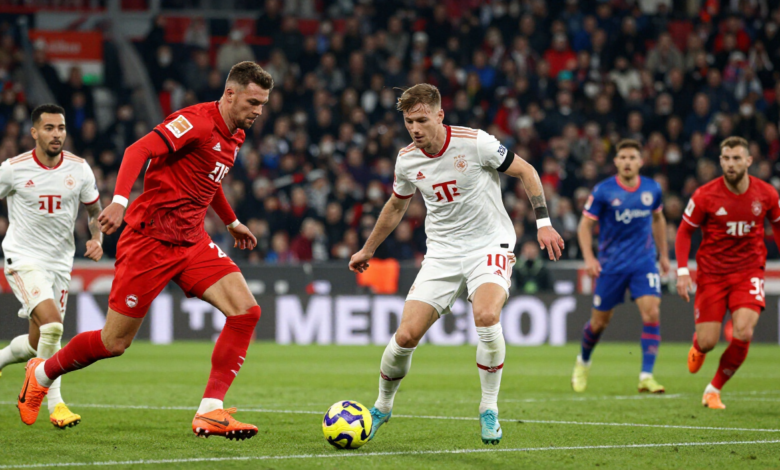
The mechanism behind these open games comes from how tactical setups interact. High presses and aggressive rest offense mean that when an attacking move breaks down, the opponent often finds space immediately, creating chains of transitions instead of isolated counters. Teams like Dortmund and Leverkusen, identified in tactical previews as pressing high and playing vertically, naturally produce matches where the ball moves quickly from one final third to the other, especially when their opponent shares those principles rather than sitting in a deep block.
Expected-goals tables show Bayern at 2.31 xG per game, with Leipzig, Leverkusen, Dortmund, and Stuttgart all above 1.7 xG, illustrating how frequently they reach shooting positions. When two high-xG sides meet, every turnover in midfield carries potential to produce another shot in less than 10 seconds, turning large portions of the match into almost constant attacking exchanges.
How Game State Intensifies End-To-End Patterns
Scoreline evolution often amplifies this effect. If the underdog scores first against a stronger attack, the favorite pushes its line higher, which opens counter-attacking channels and encourages both sides to attack more directly, raising xG for both teams across the remaining minutes. Similarly, a 1–1 scoreline involving two attack-minded sides tends to trigger a mutual “go for it” mentality in the last 20 minutes, as neither is content with a draw, resulting in late flurries of chances at both ends.
Using These Matchups In A Data-Driven Pre‑Match View
From a pre‑match, data-driven perspective, identifying likely attack-trade fixtures means combining team xG/xGA profiles with BTTS frequencies and recent form. Bayern’s dominance means their high totals can be driven by one-sided wins, but Frankfurt, Hoffenheim, Dortmund, and Leverkusen often display both high xG for and significant xGA, signaling that their games are prone to mutual scoring. When two of those teams meet, the base probability of BTTS and higher goal ranges increases—though prices will often reflect that, leaving the value question to whether the market has fully captured recent tactical or personnel changes.
Form tables between specific matchdays can fine-tune this view. If Stuttgart and Frankfurt, for example, both show strong attacking form and leaky defenses in the matchday 14–19 form ranking, their upcoming meeting becomes a prime candidate for open play—provided injuries or tactical shifts have not drastically altered their risk profile. That synthesis gives bettors a structured way to flag fixtures worth deeper study rather than relying on reputation alone.
How An Online Betting Site Might Reflect These Open Fixtures
Odds compilers now heavily integrate xG, BTTS stats, and team style when setting totals and both-teams-to-score lines in the Bundesliga. When fixtures feature combinations like Dortmund–Leverkusen or Frankfurt–Hoffenheim, opening lines often lean toward higher totals—3.0 or 3.25 goals—with BTTS priced as a favorite outcome, reflecting an expectation of end-to-end play rather than balanced control. Still, subtle disagreements occur across operators about just how high those probabilities should be, especially when recent form or injuries muddy the picture.
In those moments, some bettors use a well-known betting platform such as 168 ยูฟ่า as one of several reference points, not to copy every number, but to compare how aggressively its Bundesliga totals move relative to competitors. If their own model of likely attacking exchanges in a particular matchup suggests higher scoring than the platform’s more conservative line implies, they may see a justified opportunity to back overs or BTTS; if the platform has already pushed prices to the top of the reasonable range, the same data may instead counsel restraint.
Where “These Two Always Trade Attacks” Can Mislead
Narratives about “fun” fixtures can easily outlast the conditions that created them. Coaching changes, new signings, or a shift toward more balanced defensive structures can quietly turn a previously wild matchup into a more controlled contest, even if memory and highlight reels suggest otherwise. Overreliance on historical thrillers without checking current xG, pressing intensity, and defensive numbers risks backing overs and BTTS at prices that assume a style no longer in evidence.
In addition, variance plays a role: even in high-xG, open games, finishing can misfire, goalkeepers can excel, or woodwork can intervene, producing 1–1 or even 1–0 scorelines from what felt like end-to-end spectacles. Treating a single low-score outcome as proof that a fixture type has “changed” can be just as misleading as ignoring tactical evolution altogether; the key is to watch the process—shots, xG, territorial control—rather than only final scores.
Summary
Bundesliga fixtures most likely to turn into attack-for-attack contests usually feature teams with high xG for, significant xGA, and strong BTTS records, a profile that currently fits clubs such as Frankfurt, Dortmund, Hoffenheim, Leverkusen, Stuttgart, and, in their own way, Bayern. When those sides meet each other, pressing intensity, vertical transitions, and game-state dynamics combine to produce matches where both penalty areas stay busy and goals often arrive in bursts. For analysts and bettors, the key is to track those structural traits and current form, using them to flag likely end-to-end fixtures without falling into the trap of assuming that past thrillers guarantee future chaos once tactics, personnel, or pricing have moved on.